
Recognition & Feedback Models That Boost Engagement
- Published on: November 16, 2025
Step into any high-performing organization, and you’ll notice something beyond perks or polished branding: people there feel seen. They know their work matters because someone acknowledges it, and when things go wrong, they get constructive guidance instead of silence.
That emotional equilibrium, being valued and guided, is what fuels employee engagement. It doesn’t happen by chance. It’s built through two deliberate practices: recognition and feedback.
Recognition fuels motivation. Feedback drives growth. Together, they create a high-engagement culture where performance, purpose, and belonging reinforce each other.
As explored in Employee Engagement Training Essentials, recognition and feedback aren’t HR buzzwords; they’re operating systems for modern leadership. Modern research reinforces this, especially insights from Forbes on how feedback acts as a catalyst for leadership growth and employee development, a perspective detailed deeply in the article The Power of Feedback: A Catalyst for Growth in Leadership and Employee Development.
Let’s explore how these frameworks actually work and why they anchor every sustainable engagement strategy.
The Psychology of Recognition in Employee Engagement
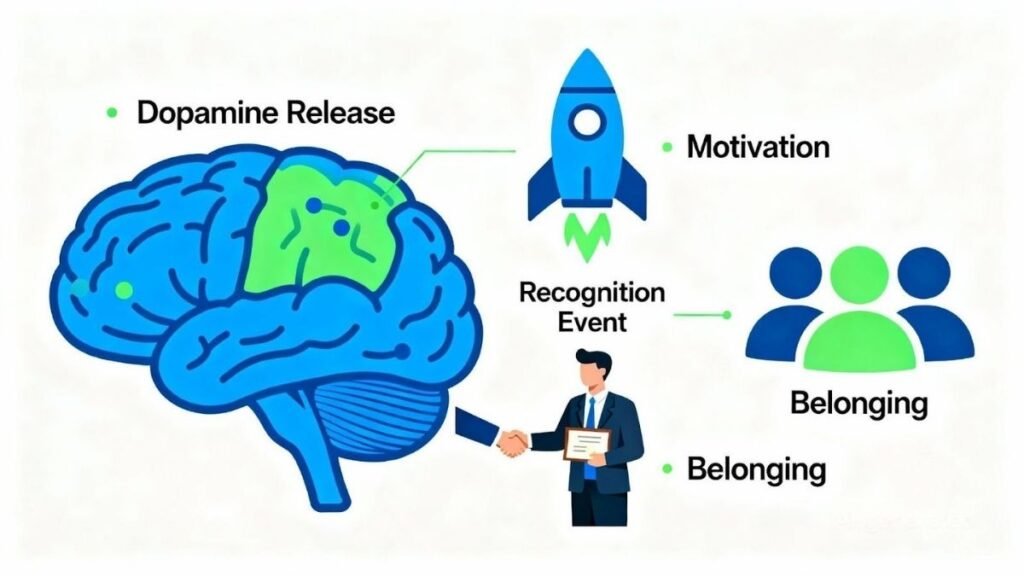
Recognition is the behavioral currency of motivation. Neuroscience shows that meaningful appreciation activates dopamine pathways, strengthening the memory of success and encouraging repeated high-performance behaviors. This mechanism is explained clearly by Harvard Health, which outlines how dopamine functions as the brain’s pathway to pleasure and motivation.
But recognition is more than chemistry; it’s trust. When employees see that effort is noticed, fairness improves, communication opens, and disengagement declines..
A Gallup meta-analysis found that organizations with strong recognition programs experience 31 % lower turnover and 12 % higher productivity. The underlying reason is psychological safety; people feel safe taking initiative because their contribution is acknowledged rather than overlooked.
Recognition also fulfills the human need for belonging, connecting directly with the trust-building frameworks discussed in Psychological Safety and Employee Trust in Teams.
Takeaway: Recognition isn’t a courtesy; it’s a strategic behavioral trigger that shapes motivation, retention, and culture.
Recognition & Feedback Frameworks That Drive Motivation
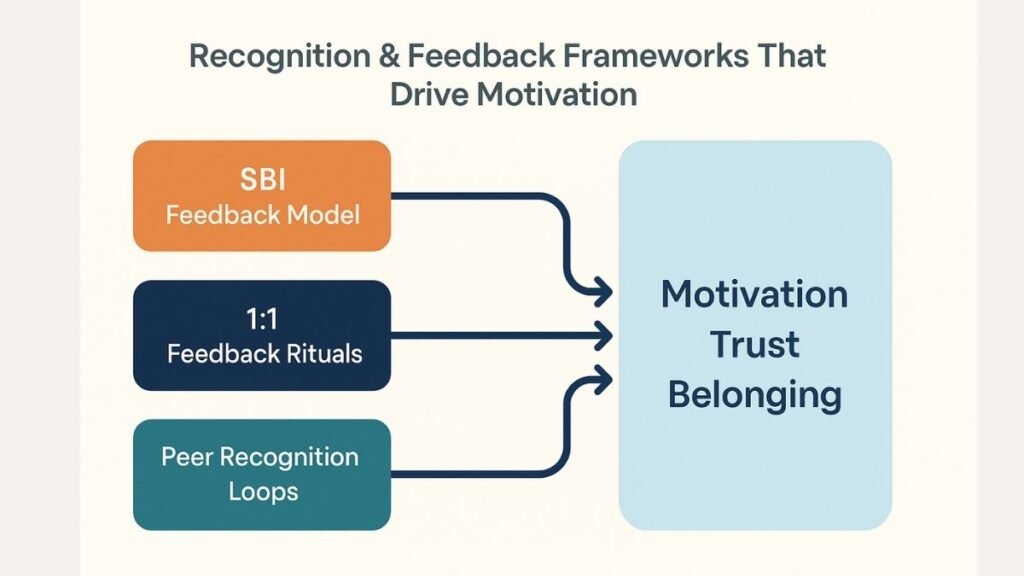
To turn appreciation into sustained engagement, leaders need structure. Unsystematic praise fades; consistent frameworks scale. The three most evidence-backed models are:
- SBI Model (Situation–Behavior–Impact) – brings clarity and removes bias.
- 1:1 Feedback Rituals – deepen trust through predictable dialogue.
- Peer Recognition Loops – expand belonging through social validation.
Each model reinforces one dimension of engagement: clarity, connection, or community. The right balance among them determines overall ROI, a link explored further in How to Measure Employee Engagement ROI in 2026.
SBI Feedback Model for Clear Communication and Continuous Improvement
Developed by the Center for Creative Leadership, the SBI model remains a gold standard for behavior-based feedback. It helps managers replace vague judgments (“You’re not proactive”) with observable evidence.
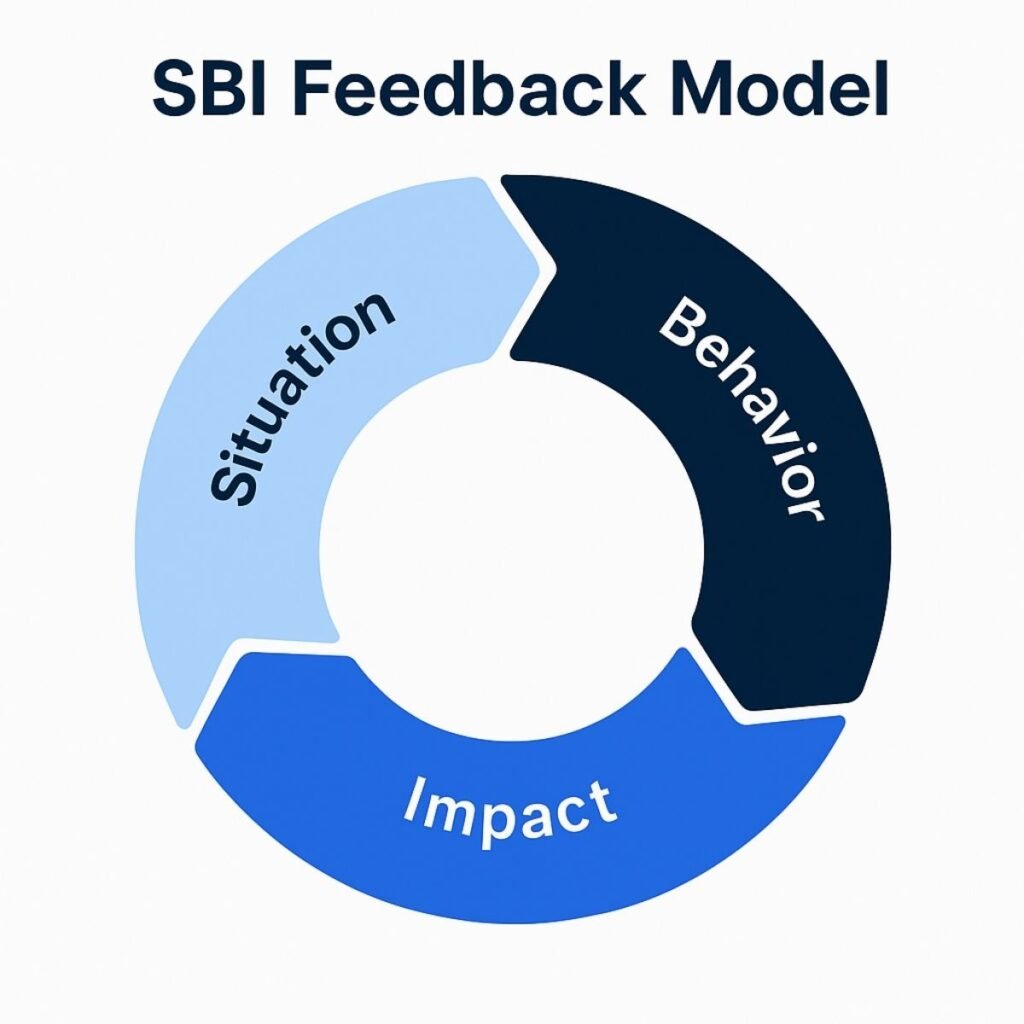
The three steps:
- Situation – Identify the specific event.
- Behavior – Describe actions, not assumptions.
- Impact – Explain tangible results or effects.
Example:
“During Tuesday’s design review (Situation), you clarified the client’s pain point before showing the mock-ups (Behavior), which helped the team align faster (Impact).”
This approach minimizes emotional friction and turns every feedback moment into a micro-coaching session.
Benefits:
- Drives self-awareness without defensiveness.
- Creates shared understanding of expectations.
- Strengthens communication agility in performance reviews.
Potential Pitfall:
If rushed, SBI can sound mechanical. HR coaches should pair it with active listening to maintain empathy.
HR Application:
Embed SBI templates into review software or onboarding guides. It keeps language consistent and trains new leaders to give feedback that actually changes behavior.
1:1 Feedback Rituals That Build Trust and Accountability
If SBI is the micro-lens, 1:1 rituals are the macro-framework. Regular check-ins (weekly or biweekly) institutionalize transparency and psychological safety.

They work because they convert management into mentorship. Employees discuss goals, blockers, and growth without judgment. Leaders practice listening before advising.
Best Practices:
- Schedule, don’t improvise — predictability builds trust.
- Balance task talk with career talk.
- End with mutual commitments (“Here’s what we’ll each do next week”).
Evidence of Impact:
Organizations that institutionalize 1:1s report up to 30 % higher engagement and measurable lifts in eNPS (Employee Net Promoter Score).
These rituals directly connect to the emotional intelligence competencies covered in Employee Engagement Training Essentials: empathy, active listening, and reflective communication.
Pro Tip: Use short digital pulse surveys after each 1:1 to quantify sentiment trends; aggregate data supports the ROI analyses detailed in How to Measure Employee Engagement ROI in 2026.
Peer Recognition Loops for Team Cohesion and Belonging
While managerial feedback sets direction, peer recognition builds momentum. People crave appreciation from equals; it validates contribution and strengthens community identity.
How It Works:
- Colleagues nominate or “shout out” one another for daily wins.
- Recognition data feeds internal dashboards visible to the team.
- Managers amplify peer praise during town halls or newsletters.
Why It Works:
- Activates social proof: when peers model gratitude, others mimic it.
- Reduces over-reliance on top-down validation.
- Increases perceived fairness because recognition is distributed.
A Terryberry study shows peer programs raise engagement by 26 % and cross-functional collaboration by 19 %.
These loops are the living manifestation of psychological safety, explored in depth in Psychological Safety and Employee Trust in Teams, where appreciation travels laterally, not hierarchically.
Implementation Tip: Start small with a “kudos” channel or monthly recognition roundtable; expand once participation hits 60 % of staff.
How to Implement Employee Feedback Systems and Measure Engagement
Systemization bridges the gap between good intentions and measurable outcomes. Here’s how HR teams operationalize feedback frameworks:
- Plan: Define engagement outcomes (e.g., lower turnover, higher eNPS).
- Test: Pilot SBI and peer-recognition tools with one business unit.
- Track: Use dashboards to monitor participation, sentiment, and recognition spread
- Refine: Adjust cadence, tone, and tech quarterly.
Metrics That Matter:
- Engagement Score (survey average)
- Feedback Frequency Ratio (touchpoints per quarter)
- Recognition Participation Rate (givers vs. receivers)
These data points form the quantitative backbone of engagement ROI analysis described in How to Measure Employee Engagement ROI in 2026.
Remote & Hybrid Recognition Strategies for Distributed Teams
Distance doesn’t dilute recognition; it demands creativity.
Hybrid employees need visibility without proximity.
Effective Tactics:
- Virtual Kudos Walls: Shared boards where teammates post gratitude notes.
- Recognition Bots: Slack integrations that automate shout-outs.
- Asynchronous Celebrations: Video thank-yous or GIF reactions for milestones.
Why It Matters:
Remote staff miss informal “thank-yous” overheard in hallways. Digital tools recreate that sense of community asynchronously.
According to JoinAssembly, virtual recognition increases belonging in hybrid teams by 20 %. For deeper frameworks on keeping distributed teams emotionally cohesive, read Engagement Strategies for Remote & Hybrid Teams: Building Connected Workplaces Anywhere.
Takeaway: Recognition must cross time zones if engagement is to scale globally.
Related Soft Skills That Strengthen Feedback Culture
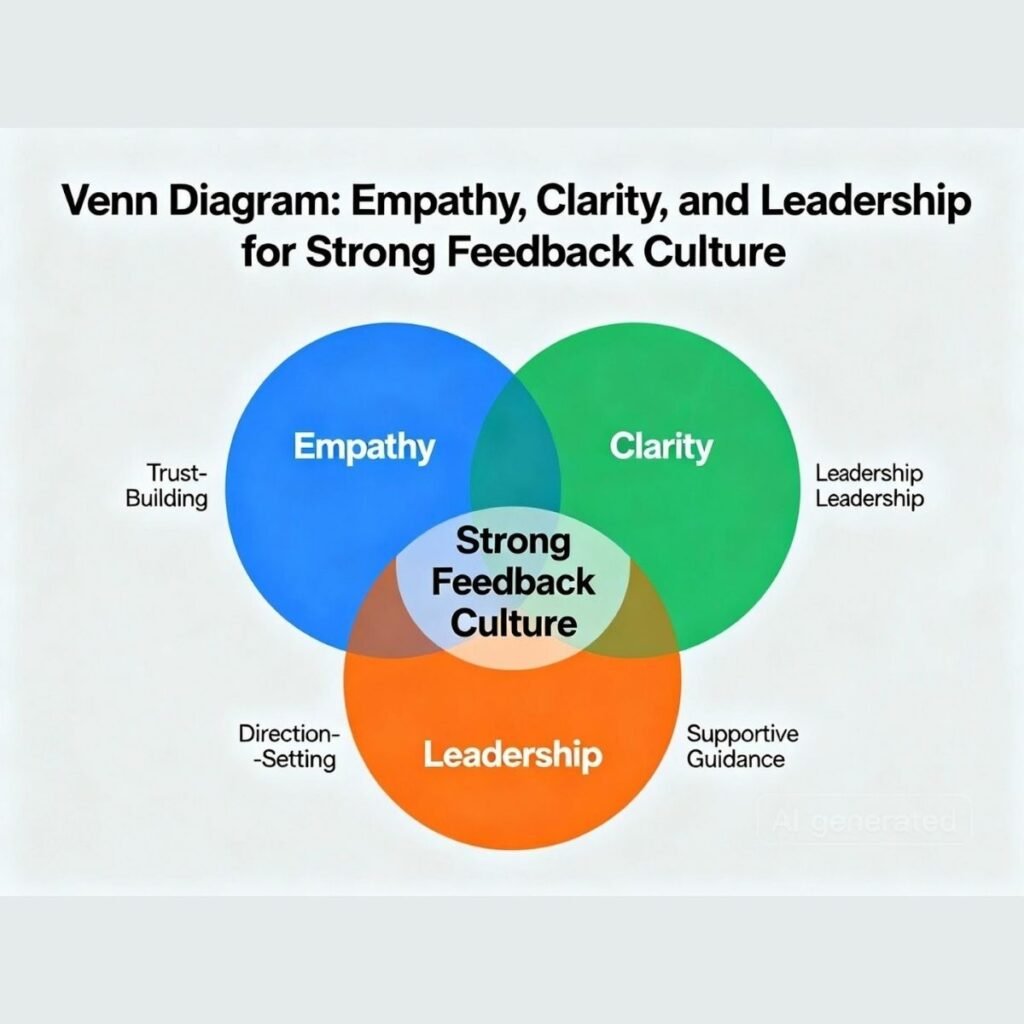
Frameworks provide structure, but soft skills provide soul.
Without empathy, even the best model feels mechanical.
Key soft-skill enablers include:
- Emotional Intelligence – reading tone and timing feedback empathetically
- Communication Clarity – simplifying complex ideas without dilution.
- Leadership Presence – modeling vulnerability and openness.
Together, these create the trust baseline necessary for all the above frameworks to thrive, reinforcing the principles of Psychological Safety and Employee Trust in Teams.
How Learnerring Helps
At Learnerring, we bridge theory and practice. Our Employee Engagement Skill Course trains HR professionals and people managers to:
- Design recognition architectures tailored to cultural size.
- Coach through the SBI and 1:1 frameworks.
- Build analytics dashboards that tie engagement directly to ROI.
The result? Engagement that’s not ornamental, it’s operational.
FAQs About Recognition & Feedback Models
Because they activate both intrinsic and extrinsic motivation, recognition satisfies belonging, and feedback channels growth.
Weekly or biweekly 1:1s maintain connection without fatigue. Frequency builds familiarity, and familiarity breeds trust.
By correlating recognition participation and eNPS improvements with retention and performance metrics — as outlined in How to Measure Employee Engagement ROI in 2026.
Inconsistency, favoritism, and lack of transparency. Public dashboards and peer loops mitigate these risks.
Through asynchronous recognition tools and virtual 1:1s — detailed in Engagement Strategies for Remote & Hybrid Teams.
Closing Reflection
Every company talks about culture. Few measure it. Even fewer build it intentionally.
Recognition and feedback are where culture stops being abstract and becomes felt, in a manager’s timely “well done,” in a peer’s Slack message, or in the quiet confidence of an employee who knows they matter.
If you’re an HR leader, think of these models not as frameworks, but as habits of leadership. Start small, track outcomes, and refine relentlessly.
Because the real ROI of engagement isn’t just higher productivity, it’s people who choose to stay, grow, and lead others the same way.
Share it :

Soft Skills Courses for Professionals
4.8 / 5.0 Rating
Boost your communication, leadership, and emotional intelligence with practical soft-skill training designed to help professionals excel and grow in the modern workplace.