

Employee Engagement Training: A Complete Guide for HR & Managers
- Published on: November 9, 2025
What Is Employee Engagement Training and Why Does It Matter in Corporate Culture
In every thriving organization, engagement isn’t a checkbox; it’s the heartbeat that keeps people connected to purpose, peers, and progress. When employees feel seen, trusted, and inspired, performance follows naturally. When they don’t, even the best strategies fall flat.
That’s why employee engagement training has shifted from being an HR initiative to becoming a core leadership discipline. It teaches managers to move beyond metrics and build environments where people genuinely care about outcomes, not because they’re told to, but because they want to.
According to Forbes Human Resources Council, organizations that weave engagement into their training strategies outperform those that treat it as an afterthought. Training engagement doesn’t just improve learning retention; it builds commitment that multiplies productivity across teams.
Yet HR leaders still face familiar challenges: rising turnover, digital fatigue, and fragmented communication. These issues make structured engagement training the backbone of any sustainable talent strategy.
Why Employee Engagement Matters for HR Managers and Business Leaders
For HR and business leaders, engagement is now a measurable business variable, not a soft concept. Engaged employees deliver stronger customer outcomes, lower attrition, and higher innovation.
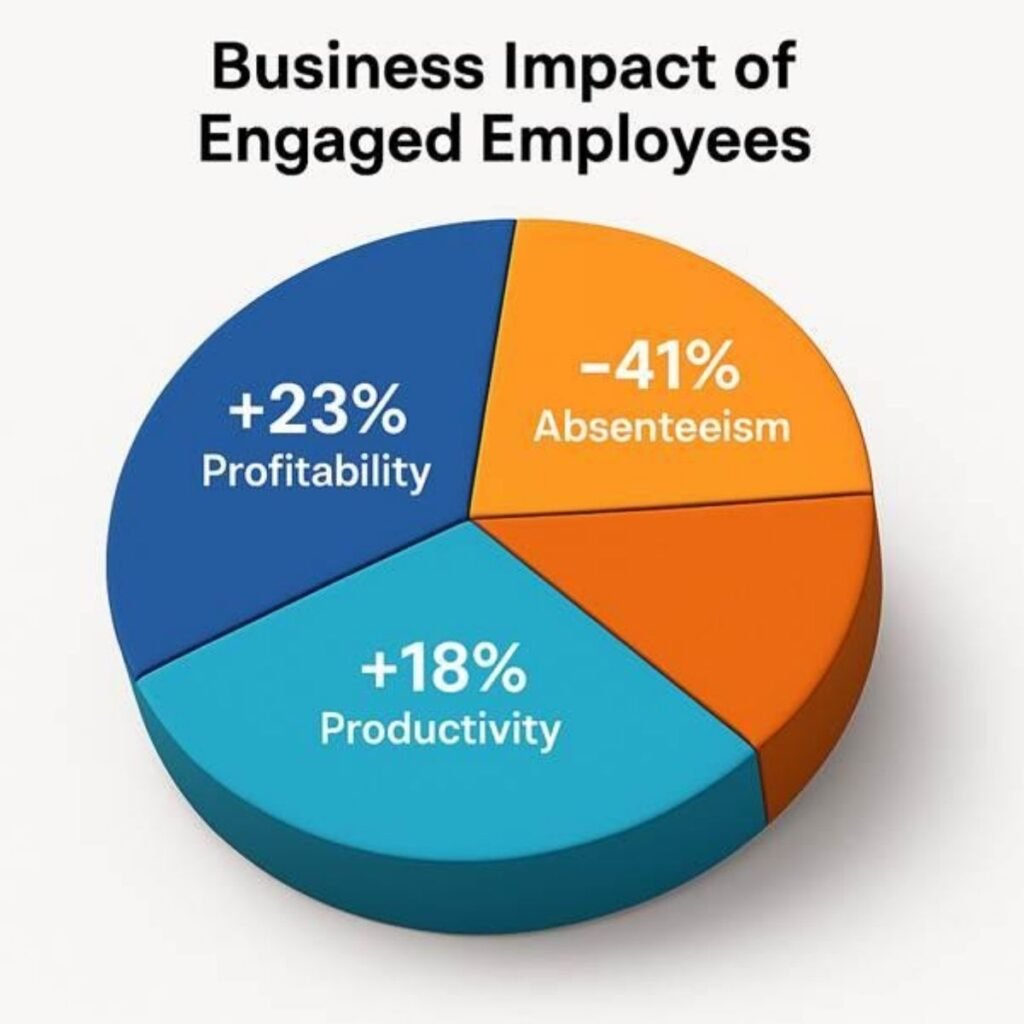
A 2024 Gallup study found that highly engaged teams are 23% more profitable and 18% more productive than disengaged ones. That makes engagement a clear ROI driver, directly influencing operating margins and brand reputation.
To understand why it matters, consider internal training data from Statista: over 49% of organizations struggle with learner engagement in their internal programs. When employees feel detached, even well-designed L&D investments fail to deliver impact. Employee engagement training solves this by re-teaching leaders how to connect training objectives with employee motivation.
Core Pillars of Employee Engagement
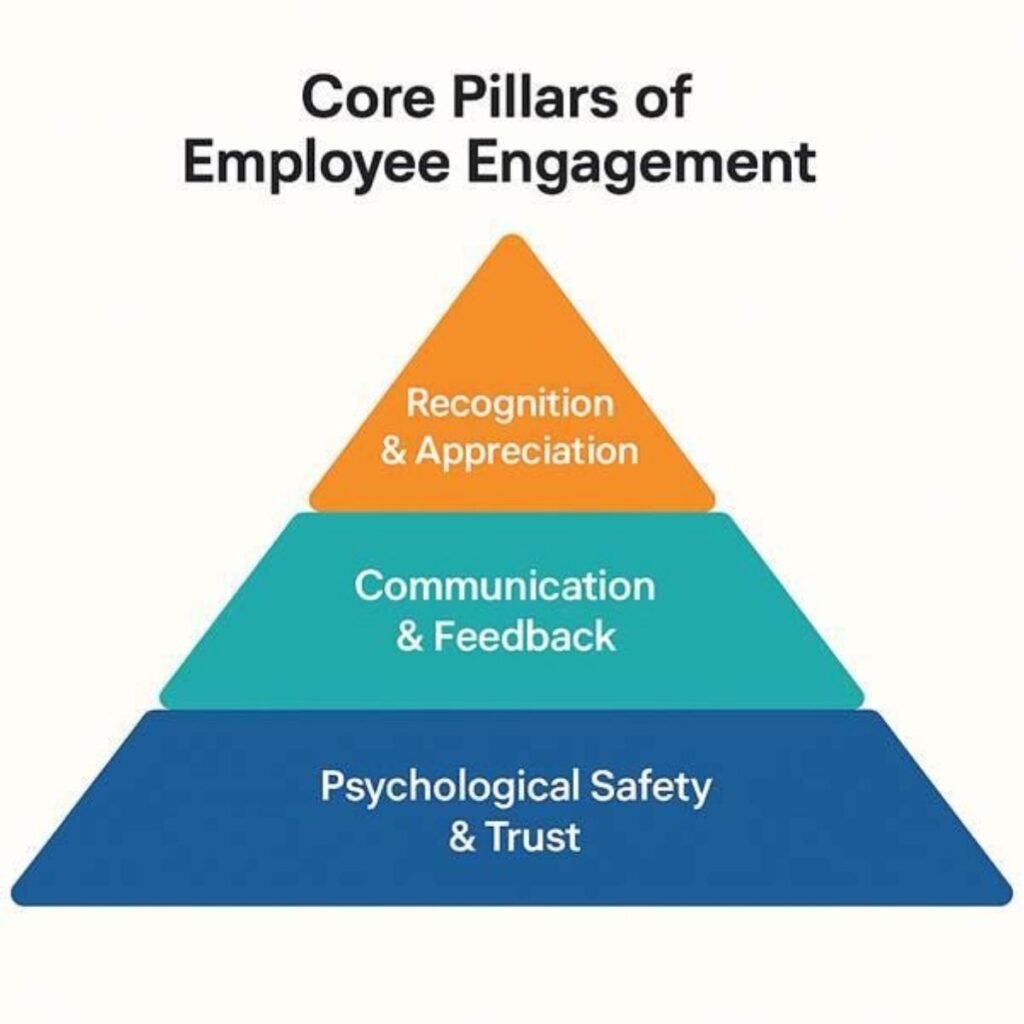
Every successful engagement program rests on three pillars: recognition, feedback, and trust.
Recognition and Appreciation
Recognition isn’t just morale-boosting; it’s behavior-reinforcing.
Structured recognition programs, whether weekly shoutouts or digital kudos, signal what the organization values. As detailed in our Recognition & Feedback Models That Boost Engagement blog, structured recognition systems transform appreciation into a consistent culture driver, explaining how regular acknowledgment directly boosts morale and reinforces desired behaviors.
Communication and Feedback Models
Open communication prevents disengagement before it starts. Training managers on SBI (Situation–Behavior–Impact) or Radical Candor helps them deliver feedback that is specific, constructive, and psychologically safe. These frameworks replace one-way evaluation with two-way dialogue, turning performance management into performance coaching.
Psychological Safety and Trust
Trust creates the foundation for all engagement. When leaders admit mistakes, listen actively, and encourage dissenting ideas, they build environments of psychological safety.
Harvard Business Review notes that companies emphasizing emotional intelligence and psychological safety outperform their peers on innovation and adaptability, the very outcomes engagement training targets.
You may explore our full guide on Psychological Safety and Employee Trust in Teams to learn how emotionally intelligent leadership fosters long-term trust and open communication.
In fact, psychological safety and trust don’t just strengthen communication, they set the stage for recognition to truly work, turning appreciation from a surface-level gesture into a meaningful driver of motivation and belonging.
The Psychology of Recognition
Recognition is more than a kind gesture; it’s behavioral reinforcement backed by psychology. When employees receive acknowledgment for specific, meaningful contributions, it activates reward centers in the brain that strengthen engagement and loyalty.
Effective recognition aligns with three intrinsic motivators from Self-Determination Theory: autonomy, competence, and relatedness. Leaders who recognize progress (not just results) cultivate a sense of psychological safety and growth.
Regular mechanisms like digital kudos boards, Friday team wins, or manager shout-outs create visibility and emotional continuity, especially across hybrid teams.
Recognition is the language of value. When employees feel valued, they start valuing the organization back.
Ultimately, recognition works best when it doesn’t end at praise, but evolves into a loop of continuous feedback, where employees know not only what they did well but how they can keep growing in real time.
Recognition and Continuous Feedback Models for Engaged Teams
Recognition celebrates what’s done well; feedback shapes what comes next. The most successful cultures integrate both into a continuous cycle rather than treating them as separate HR functions.
Engagement training teaches managers to master micro-feedback, the art of giving small, actionable insights in real time. Models like SBI (Situation-Behavior-Impact) and Radical Candor encourage clarity, compassion, and courage in daily conversations.
For example, “When you clarified the client issue (situation), your response was concise and solution-oriented (behavior), which helped close the ticket faster (impact).” This type of feedback reinforces learning while acknowledging success.
Organizations using real-time feedback dashboards report 15–20% higher retention and stronger team alignment. Recognition without feedback leads to complacency; feedback without recognition creates burnout. The balance builds trust.
Continuous feedback transforms performance reviews into performance partnerships.
Over time, these feedback loops evolve from managerial tactics into cultural DNA , signaling that learning, growth, and trust aren’t just policies, but everyday practices.
Designing a Feedback-First Culture
A feedback-first culture redefines how people communicate. It’s built on openness, humility, and mutual accountability, not hierarchy.
Leaders who ask, “What can I do differently to support you next week?” signal psychological safety and respect. This simple shift from evaluation to conversation encourages growth without fear.
Embedding such a culture involves consistent rhythms, monthly one-on-ones, quarterly retrospectives, and visible follow-ups on employee input. When feedback drives change, engagement naturally follows.
Feedback is not about fault-finding; it’s about creating forward motion.
In essence, a feedback-first culture cannot thrive without psychological safety, and, in turn, psychological safety deepens through consistent, trust-based feedback. It’s a virtuous cycle where openness fuels trust, and trust empowers honest dialogue.
Building Psychological Safety and Trust
Trust remains the emotional backbone of engagement. When leaders admit mistakes, listen actively, and invite dissenting opinions, they create psychological safety, a condition where employees feel secure to share ideas or failures without judgment.
Engagement can’t exist without trust; trust can’t grow without vulnerability.
Measuring Employee Engagement ROI and Business Outcomes
Training programs must produce data that leaders can act on. As we explain in How to Measure Employee Engagement ROI in 2026, these metrics reveal how structured training initiatives influence motivation, retention, and overall productivity over time.
Key metrics include:
|
Metric
|
Definition
|
Why It Matters
|
|---|---|---|
|
Engagement Score
|
Average rating from pulse or sentiment surveys
|
Reflects overall culture health and team morale
|
|
eNPS (Employee Net Promoter Score)
|
Measures likelihood to recommend the workplace (–100 to +100)
|
Indicates trust, advocacy, and organizational loyalty
|
|
Retention Rate
|
Percentage of employees retained year over year
|
Reveals stability and minimizes hiring and onboarding costs
|
|
Manager 1:1 Cadence
|
Percentage of managers conducting regular monthly check-ins
|
Serves as a leading indicator of engagement and support quality
|
When HR teams link training participation with these indicators, they see clear ROI pathways.
A company that raises its engagement score by just 10% can reduce turnover by nearly the same percentage, a measurable impact on both payroll and productivity.
Common Employee Engagement Mistakes That Lower Team Motivation
Even strong organizations misfire when engagement is treated as an HR campaign rather than a leadership practice. Avoid:
- Overemphasizing perks over purpose. Free lunches won’t fix unclear vision.
- Ignoring continuous feedback loops. One annual survey can’t replace a weekly conversation.
- Lack of leadership alignment. Engagement collapses when senior leaders don’t model it.
Leaders should ask, “When was the last time my team heard feedback that helped them grow?” That reflection alone often reveals the engagement gap.
How to Build an Employee Engagement Framework for Sustained Performance
Step 1 – Diagnose Engagement Levels
- Start by running a quick pulse survey to capture how your people actually feel.
- Break results down by team to uncover where energy drops or communication gaps exist.
- Share insights openly so employees see that feedback drives real action, setting the stage for trust before change begins.
Step 2 – Plan and Implement
- Use those insights to shape a focused 90-day engagement plan.
- Introduce simple habits, weekly recognition shout-outs, short feedback check-ins, and open team stand-ups that build consistency.
- As participation grows, celebrate visible wins to reinforce the momentum created in Step 1 and keep teams aligned with the bigger goal.
Step 3 – Measure and Iterate
- At the end of the cycle, review engagement scores and feedback trends to see what truly shifted.
- Connect these results to business outcomes like retention, performance, and collaboration quality.
- Then refine what worked, fix what lagged, and launch the next 90-day sprint, turning engagement into a continuous improvement loop rather than a one-time project.
How to Create a Culture of Engagement and Continuous Growth
Engagement shouldn’t be an initiative; it should be a reflex.
Embedding recognition, learning, and transparent communication into everyday processes creates long-term cultural change.
As highlighted in Engagement Strategies for Remote & Hybrid Teams, sustainable engagement thrives when connection and visibility are maintained across distributed environments.
Related Soft Skills That Boost Engagement
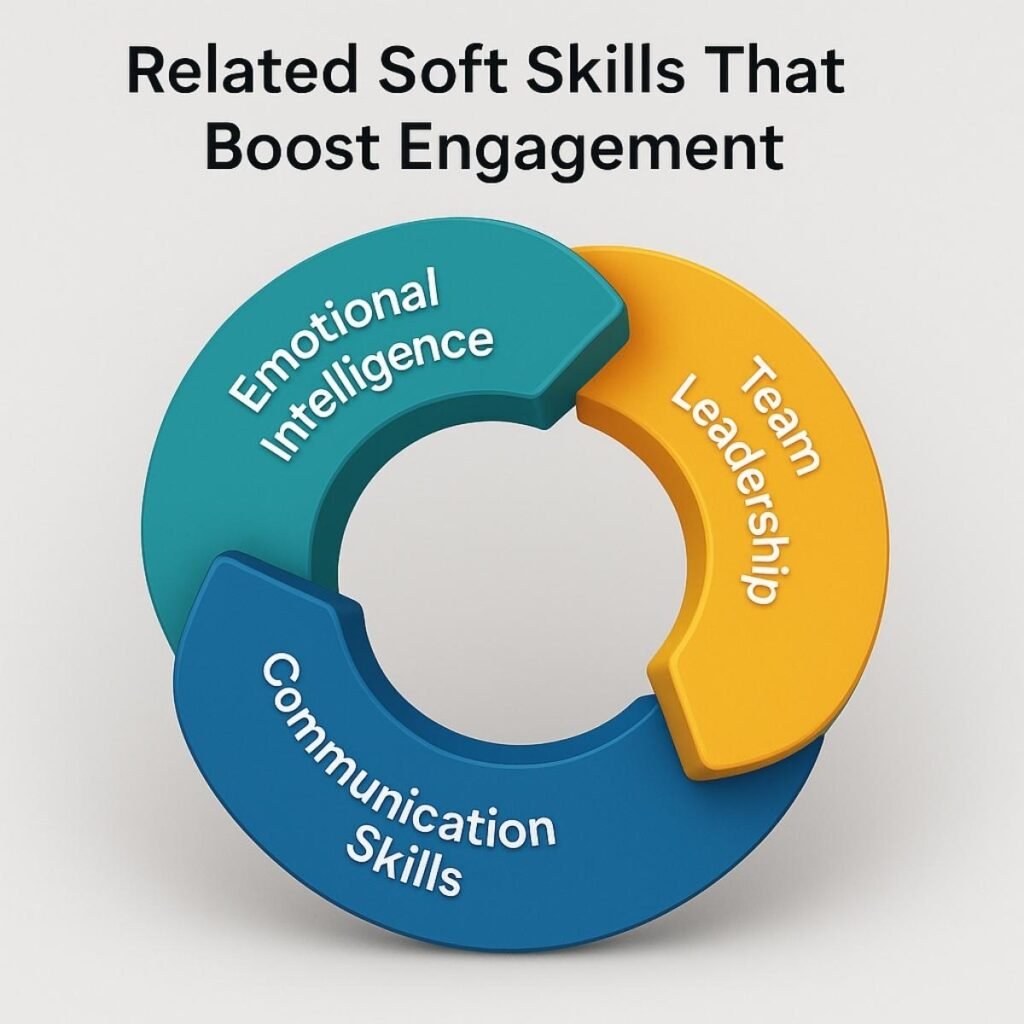
Engagement thrives on leadership behavior, and these soft skills reinforce one another to create a cohesive, high-trust environment:
Emotional Intelligence
Strengthens empathy and trust, enabling managers to recognize early signs of disengagement and respond with sensitivity.
Team Leadership
Aligns people around shared goals and builds accountability, ensuring that trust formed through emotional intelligence translates into coordinated action.
Communication Skills
Keep engagement sustained over time by maintaining clarity, transparency, and consistent two-way dialogue across teams.
Together, these soft skills form a connected framework: emotional intelligence builds trust, strong leadership channels that trust into aligned action, and communication keeps the momentum going and prevents disengagement.
Module Training Outline (Manager Track)
- Engagement Fundamentals: Business case, Gallup evidence, mindset shifts.
- Recognition in Practice: Systems, cadence, peer-to-peer mechanics.
- Coaching Conversations: SBI, Radical Candor drills with role-plays.
- Psychological Safety: Leader behaviors, retros, meeting hygiene.
- Data & Dashboards: Pulse design, eNPS, linking KPIs to outcomes.
- Habits & Accountability: 90-day plan, peer coaching, leadership reporting.
Key Takeaways
Engagement training is a leadership discipline that scales performance.
- Focus on recognition, coaching feedback, and psychological safety.
- Tie programs to clear KPIs (engagement, eNPS, retention).
- Run 90-day sprints, measure monthly, and publicly reinforce wins.
- Use evidence and trusted frameworks to keep the program durable.
How Learnerring Helps
The Employee Engagement Skill Course by LearneRRing offers HR teams a hands-on blueprint to translate engagement theory into daily leadership habits.
Participants gain:
- Pulse survey templates
- Recognition calendar frameworks
- Feedback scripts and EQ micro-lessons
- ROI tracking dashboards
By aligning training with real-world challenges, Learnerring helps leaders turn engagement into measurable business performance.
Conclusion
Employee engagement training is not an HR checkbox; it’s a leadership discipline. When recognition, feedback, and trust become daily habits, engagement transforms culture, stabilizes retention, and accelerates growth.
Organizations that invest in it don’t just keep employees; they create purpose-driven teams that thrive long after the training ends.
FAQs on Employee Engagement Training
It focuses on recognition systems, feedback delivery, emotional intelligence, and data-driven metrics that enhance motivation and retention.
Metrics like engagement score, eNPS, and retention rate quantify success. For context, Quora discussions highlight how even small improvements in eNPS can predict stronger loyalty.
Engagement ensures that employees not only attend training but also apply what they learn, directly improving ROI.
Low learner engagement and lack of manager support remain top barriers to effective internal training.
Yes. Digital recognition boards, asynchronous feedback, and virtual team retros create inclusive engagement environments across geographies.
Share it :

Soft Skills Courses for Professionals
4.8 / 5.0 Rating
Boost your communication, leadership, and emotional intelligence with practical soft-skill training designed to help professionals excel and grow in the modern workplace.